Enjoying this issue?
Get tomorrow's AI & engineering digest in your inbox — hand-picked, summarized, and always spam-free.
TLDR
Chinese open-weights models like DeepSeek and Qwen now account for more tokens on Vercel's platform than Anthropic's models, yet Anthropic captures 23x more revenue. The emerging pattern is that cheap open-weights models win on volume, while frontier closed-source labs win on dollar value — with a growing geopolitical risk as US companies build on Chinese open-source models.
Key points
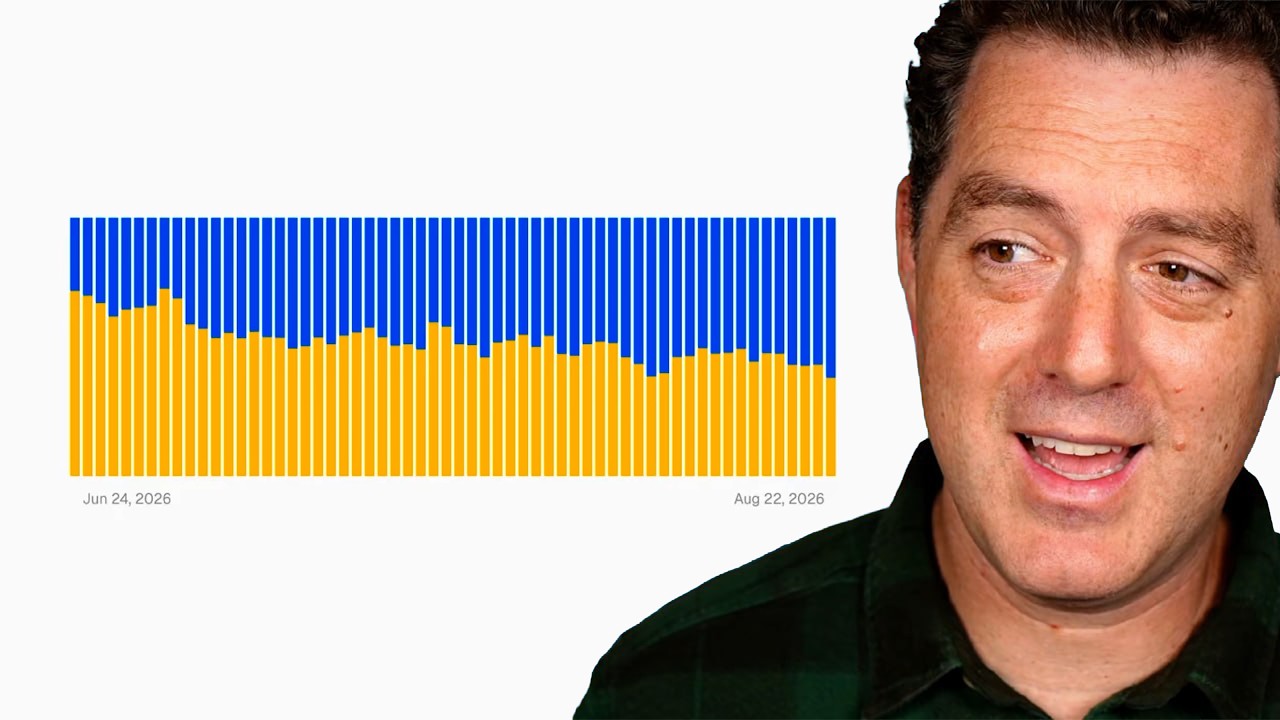
A Vercel chart shows open-weights models' token share on the platform increased from June to August 2024, while closed-weights models' share declined.
DeepSeek's token share (25.2%) has surpassed Anthropic's (24.5%), but Anthropic's spend share (64.6%) is 23x larger than DeepSeek's (2.8%).
The top closed-source models (Anthropic, OpenAI) capture ~90% of total revenue despite only ~50% of token share, illustrating the massive premium for frontier intelligence.
Example pricing: Claude Opus 5 at $15 per million output tokens vs. DeepSeek V4 Flash at $0.18 per million output tokens.
Several major US companies use Chinese open-weights models: Thompson Reuters (via Harvey) uses Qwen, Airbnb uses Qwen, Perplexity uses DeepSeek, Cursor uses Qwen.
Harvey fine-tuned Qwen 2.5 ("Kimi K3") into a legal expert, achieving top scores on legal benchmarks like Legal Agent Bench (19.7) and Lab Contracts (1st).
Per-token cost can be misleading: Kimi K3 cost per token was half of GPT 5.6 Soul, but total task cost was similar ($0.84 vs $0.96) because Kimi needed more tokens.
OpenAI has cut prices aggressively: GPT 5.6 Luna dropped 80% recently, and GPT 5.6 Soul dropped 20-33% on input/output tokens.
The CTO of Thompson Reuters analogized using closed-source models as "renting" — you don't build equity that compounds for your company.
Geopolitical risk: if US enterprises build on Chinese open-weights models, those models may become co-designed with Chinese chips, creating dependency on Chinese hardware.
Tools mentioned
Techniques
- Fine-tuning open-weights models on domain-specific data (e.g., Harvey fine-tuning Qwen for legal tasks).
- Using per-completed-task cost instead of per-token cost to evaluate model economics.
Stop scrolling. Start reading smarter.
Receive the day's most important AI & engineering updates in one concise email. No spam.
Transcript (captions)
I've been predicting something for a while now and the flip just happened. The entire story is in this chart right here. These two guys have been the main characters of the US economy for the
last couple years. And if you don't know who these guys are, that's okay. The one on the left is Sam Alman. The one on the right is Dario Amade. Open AI and Anthropic CEOs. They've built two of the
most important companies which basically didn't exist just a few years ago. These are trillionoll companies. That's basically like an Apple or Google or Meta. The entire AI economy is built on
their two companies. And that's not necessarily a good thing. But it turns out things might not actually be playing out the way most people thought. And I'm going to tell you why. But first, if you
like me breaking down complex topics like this, go ahead, hit the like button, subscribe to the channel. It very much does help. Thank you in advance. And this video is brought to
you by Higsfield. More on them later. Okay, so back to this chart. What we're looking at here is a chart out of Versel, which is basically a web hosting AI hosting company. And what we're
seeing is the percentage of open versus closed weights models that they're seeing going through their platform over time from June to August. Over the course of just a few months in yellow,
we see closed weights models that's like chat GPT and other open AAI models and Claude from Enthropic. And look at that percentage drop. The trend line is going down. So what does that mean? What do
these blue bars actually show? Those are open weights models. Those are models that are free to download, free to use. You can bring them anywhere. You can fine-tune them. You can make them custom
for your exact needs. And they tend to be far cheaper than those closed weights models. Okay. But why is this happening and why is it important? So, let's keep going. That actually brings us to China.
China has been creating and releasing incredibly good open weights models for the world to use. And yes, that's a good thing at least in the short term because all of us get to use these models. We
get to download them. We get to control the data we give to them. We can fine-tune them as I mentioned and we get to run them where we want which means they are generally less expensive than
their closeweight counterparts. But there is also a problem which I've discussed in previous videos about US companies being built on top of Chinese open source models and I'm going to get
to that in a moment. And so going back to this chart, what we're seeing is the total amount of tokens being used is trending towards open weights models. But this is not revenue. This is total
tokens. And keep in mind the total pie of tokens being used is also growing. And this is where it really gets interesting. Deepseek has actually eclipsed Anthropic in total token share
percentage. Look at this. 25.2 versus 24.5 for Anthropic. And that's the red line. But look down at the purple line. This is total model spend. Now, because DeepSeek is so much cheaper than
Anthropics models, which tend to be extremely expensive, the most premium priced models on the market, what we're actually seeing is 2.8% of total token spend dollars are actually going to
DeepSeek versus Anthropic models at 64.6%. Which is a wild number. Anthropic spend share is 23x DeepS seeks and I don't think that's
going to go away anytime soon. Even though the total share of usage is going towards deepseek and other Chinese open source models, Anthropic is still capturing the majority of the value.
Anthropic and OpenAI and that's super interesting because if you look at Deepseek versus Anthropic versus Open AI, these models are quite close. We're talking about a few percentage points
difference in these benchmarks. But those few percentage points difference, the absolute frontier is worth billions and billions of dollars apparently. The difference between 95% as good is
massive. And if we zoom out beyond just deepsethropic, we can see this story continues the same way. We have the top models on the planet taking up nearly 50% of the token share. But we can see
those same models are taking up nearly 90% of the total revenue. And so all of these options are really good. You have open source, you have closed source, you have all these harnesses. And what's
also cool is the sponsor of today's video works in all of it. It doesn't matter if it's closed source, open source. Check this out. If you're a content creator like me or you want to
become one, which you should definitely do, it's typically a fun job, but there are parts of it that are quite annoying and tedious. Coming up with ideas, writing hooks, actually recording videos
like this, that's a lot of fun. But having to take one of my videos and repurpose it to different platforms, re-edit it, find and add different B-roll, it is the most tedious thing
ever. And so I'm partnering with Higsfield because they just released Higsfield MCP which plugs directly into the agent you're using and it will do much of that work automatically for you.
So if you're using an agent to help you research and plan for a piece of content, that same agent can now generate video, can now generate images and takes a lot of that work off of your
plate. And so to connect it, you add Higsfield as a connector in Claude just like this. So, click on settings, then connectors, add custom connector, enter Higsfield, put in the MCP URL shown on
screen here, then connect and sign in. And that's it. Super useful. Go try it out. Click the link down below in the description. Let them know I sent you. Thanks again to Hicksfield. Back to the
video. And so, this is Gavin Baker, venture capitalist, investor, really deep in the world of tokconomics. He says open-source AI taking share is positive for AI infrastructure demand
because these open weights models can be run anywhere. More people get them, more tokens get used, and then of course more chips are needed to power them. And so Nvidia wins when open source becomes
more popular. That's why they're pushing so hard in open source. And something else interesting is an open source token costs just as much compute to produce as a frontier token. there's really no
difference between an open weights model and a closed weights model. It's just kind of the ecosystem around them tend to make them less expensive. And so he predicts frontier tokens, so that's
anthropic and open AAI are 60 to 90% of all economic value, but only 10 to 25% of tokens. And so that is what this chart is showing. And more importantly, the hardest tasks are the ones that
people are willing to pay a huge premium for. Think about highfrequency trading for example. You want the best possible tokens and for those use cases you're willing to pay for it because the value
of having a slight advantage over your competitor is literally billions of dollars. But again, this isn't bad for the rest of the economy where we don't necessarily get so much value over that
incremental intelligence in a given model. It's actually quite good because we get really good tokens. Maybe not the absolute frontier, but very appropriate for all of the tasks that we're
accomplishing for a fraction of the price. So, here's an example of the pricing difference. Here's Claude Fable 5, which is $50 per million output tokens versus Deep Seek V4 Flash, which
yes, it is a different class of model. It's a flash model, but 18 cents per million output tokens. I mean, that's a crazy price difference. And especially if Deep Seek V4 Flash can handle the
vast majority of tasks for the vast majority of people, why would they ever want to pay $50? But again, when the right answer matters, when the Deep Seek V4 flashes of the world cannot get to
the right answer on the hardest problems, that extra cost is well justified and the labs are eating up all the revenue. We have Anthropic at above 65 billion in annualized run rate and we
have OpenAI at about 40 billion. That is more than every open model provider combined. But again, there are really positive outcomes with having these open weights models being much less
expensive. So Aaron Levy, CEO of Box, shout out to Box. Open Weights expand the market and lower costs, which is fantastic. When things cost less, more people have access to it. And by the
way, if you want this entire slide deck, I'm going to host it on Box. I'll drop a link down below. But there are a lot of considerations. It's not just lower cost equals better or higher intelligence
justifies the cost. There's much more to it. Martin Casado starts to get into it. So model choice depends on cost, but also privacy and product fit. And so I think actually privacy is a huge one.
This is why a lot of companies are starting to build their businesses on top of open source models. And I'm not talking about companies you haven't heard of. These are big big tech
companies that you definitely have heard of. We have Thompson Reuters using Quen Harvey which is a legal AI platform Kimmy K3 cursor Kimmy K2.5. Airbnb using Quen. Perplexity using Deepseek. So, a
lot of these US companies are being built on top of Chinese open source models. And that's because a lot of these companies value not only the cost, but the privacy, especially, think about
Harvey. When you're dealing with sensitive information from your legal clients, you want to use a model that you have full control over. Plus, they're fine-tuning the model. They're
not just taking the off-the-shelf Kimmy model and just serving it. They're fine-tuning it based on all of their internal data. and they can do so because it's an open weights model.
Here's a blog post from Harvey about their fine-tuning process and specifically the results they were able to get. So, they took Kimmy K3 and customized it to be a legal expert. And
now look at this. We have all of these legal benchmarks and Harvey's model performs incredibly well. Here's Legal Agent Bench 19.7 just behind Muse Spark at 20. Lab contracts number one. We have
Apex agents which is corporate law 74. And you can see all the rest of them are near the top. The open weights models are already great and can get even better with your data which you don't
have to worry that anthropic or open AI are training their next model on. And then bindu ready says judge cost per completed task not just per token. That is also very important. Something I've
talked about in the past. It's not just what is the cost per million output, million input tokens. It is what is the cost to complete a real world task because some models use many more tokens
to complete the same exact task as another model. So here's a great example. We had Kimmy K3 which was half the price per token than GPT 5.6 soul. But look, the total price of a completed
task is almost the same. 84 cents versus 96 cents. That's because Kimmy K3 needs many more tokens to come to the same conclusion on a task. So this is Christian Catalini. He is the founder of
the MIT cryptoeconomics lab. He was also the head economist at Meta for a while. So he really knows his economics. And by the way, he also wrote an incredible piece on forwardfuture.com
about this exact topic. I'm also going to drop that link down below so you can read it. So he says the token spend value will split three ways. Number one, we will have cheap generalist models.
Commodity open weights, most volume, small percentage of total spend. That's kind of what we're seeing. Then we have soda, which is state-of-the-art specialists, enterprise proprietary
context, open weights, most spend. So these are the frontier models coming out of open source labs. These are still open weights models. They still get to control the model completely. They get
to fine-tune it. They get to control the data which is great. And then we have the absolute frontier state-of-the-art generalist closed labs. Small percentage of total volume but most of the revenue.
Okay. So I really want to take a minute to talk about why open weights models are so important. And I've been such a big proponent for a while. I hope you're excited about open weights models
because it does a lot for us. So a few things. Number one is ownership. You own the data. You literally can take the model. You give it your own context. The output you own. Everything end to end is
fully in your control as a business. And this is really important. Fable from Anthropic has gotten a lot of blowback because they keep your data. So if you're a business and you have really
sensitive information, you're basically just giving it to Anthropic if you're using Fable. And not only that, as you're using it, let's say you don't even have sensitive information from
your clients, but you're basically telling them how your company operates as you're using their model. So if one day they wanted to compete with you, they would have all the data necessary
to basically train a model to compete directly with your business. And so this is something I've talked about quite a bit on the channel. It's called platform risk. When you build your entire
business based on another company's service, and in this case it's a model, you're taking on significant risk that if one day they decide to compete with you, if they decide to turn you off,
you're basically completely beholden to them. You also have bargaining power. Now, instead of only being able to go to one company for your AI, you have this open weights model. You can host it
yourself. If that's not for you, you can go to the couple dozen inference providers that are out there, these neo clouds, they're called, basically data centers that will load your model and
serve it to you. And they're competing with each other. There are not just two major players, OpenAI and Anthropic, to choose from. You get to choose from dozens. And that's really good.
Competition is always good for the end user. And then, of course, customization. When you can control the model, when you are free to customize the model to your needs, you can
actually get much more intelligence out of the model for the same exact price just because you can feed it all of your data and it will learn how you do business, how you do development,
whatever it is, it will learn about you and you will customize it to your needs. And this is all good because it puts competitive pressure on the Frontier Labs. Now, again, they're fine. Don't
worry about the Frontier Labs. They're going to make tons of money by just the fact that they have more intelligent models. The delta between the absolute frontier and one level below them is
significant enough to make billions and billions of dollars. And open waste models are not only good for all those reasons. There's another one. Everybody can get their hands on it. Everybody can
look at them. For example, there are already over 151,000 Quen derivative models. That means developers and fine-tuners out there have downloaded the model have customized it in all
these different awesome ways. So if you don't want to do that or you don't know how to customize these models, people are doing it for you and you can just download one of those models. And by the
way, these Chinese open source models are getting really good like very close to the frontier which is fantastic. So this is from artificial analysis. This is their intelligence index. Let me just
show it to you on their website. So, we have Claude Opus 5 Max at the very top. We have GPT 5.6 in third place. And we're talking about like one or two points difference between these. And
then look at number five at 60. Kimmy K3 Max. That is an open weights model. We have GLM 5.3 at 60, which is another open weights model. We have Quen 3.8 at 58. Another open weights model. Muse
Spark from Meta. This is a US company. we have it at 57. So really in the top 10 for our open weights models. So I actually think open weights is not too far behind which means they're really
good for most tasks because most people don't need the absolute frontier. The CTO of Thompson Reuters had a fantastic quote that I'll read to you. renting a house, you still have a roof over your
head and somebody's taking care of it and it's great, but you're not building any equity that compounds into something valuable for you long term. And I think as a business owner, as an enterprise
company, you really have to consider this strongly. You are renting intelligence from OpenAI and from Anthropic. You are giving them your data in the meantime. And ultimately, what
are you building for your company? Whereas if you take one of these open source models, train it yourself, run your own benchmarks, create your own benchmarks, give it all of your data,
build that enterprise knowledge about how to do all of these things. That is real equity built over time. That will compound. That's what he's talking about. And OpenAI and Anthropic are not
sitting idle while this happens. Well, at least Open AAI isn't. They are dropping their prices quite aggressively. In fact, just a few weeks ago, the GPT 5.6 Luna model had its
price dropped by 80%. And just yesterday, GPT 5.6 Soul, the best model they have, dropped by 20 and 33% input and output tokens. Significant price reductions. This is supposed to be
$20 per million output tokens, by the way. I mistyped that. All right, so what does all this mean? Well, one, these open weights models are definitely going to win on token volume, and that's good
for everybody. That's good because we get cheaper tokens, we get more tokens, we get great intelligence, we have more control over privacy, over our spend, over where our data goes. All of this is
good. And the closed source labs, particularly OpenAI and Anthropic, will win on revenue. they will capture the majority of the value of revenue because paying for the right best answer is
worth a lot of money. Now, here's the problem for the American economy. Most of the open weights models are coming out of China. And what I predict may happen is if US enterprise companies
choose Chinese open-source openw weightights models to build their businesses on top of it sounds good in the short term but will cause problems when the models start being co-designed
with Chinese chips in mind. Right now everything is being trained and served on Nvidia chips but China is definitely building their own chips. They're just not quite as good as Nvidia chips yet.
And when the model is so closely co-designed with a chip and we're building on top of their models, we become dependent. We, the United States, become dependent on Chinese chips. And
that is a big geopolitical risk. So, if you haven't already, go get an open source model. Download it, customize it, use it at your business, use it on your local computer, get familiar with how to
use it because you're going to save a ton of money. You're going to have much more control, and it is just such a valuable skill to learn how to get these models up and running. And I am slightly
less worried about the concentration of power risk that I've talked about in the past because OpenAI and Anthropic basically owned the entire AI market. We're starting to see that shift, but I
am still worried that the US does not have a strong open-source strategy yet. Thanks again to Higsfield for sponsoring the video. Go check out their MCP server, Get Real Work Done, link down
below. And I went into depth about the geopolitical risk of Chinese open source models. Check out that video right