Enjoying this issue?
Get tomorrow's AI & engineering digest in your inbox — hand-picked, summarized, and always spam-free.
TLDR
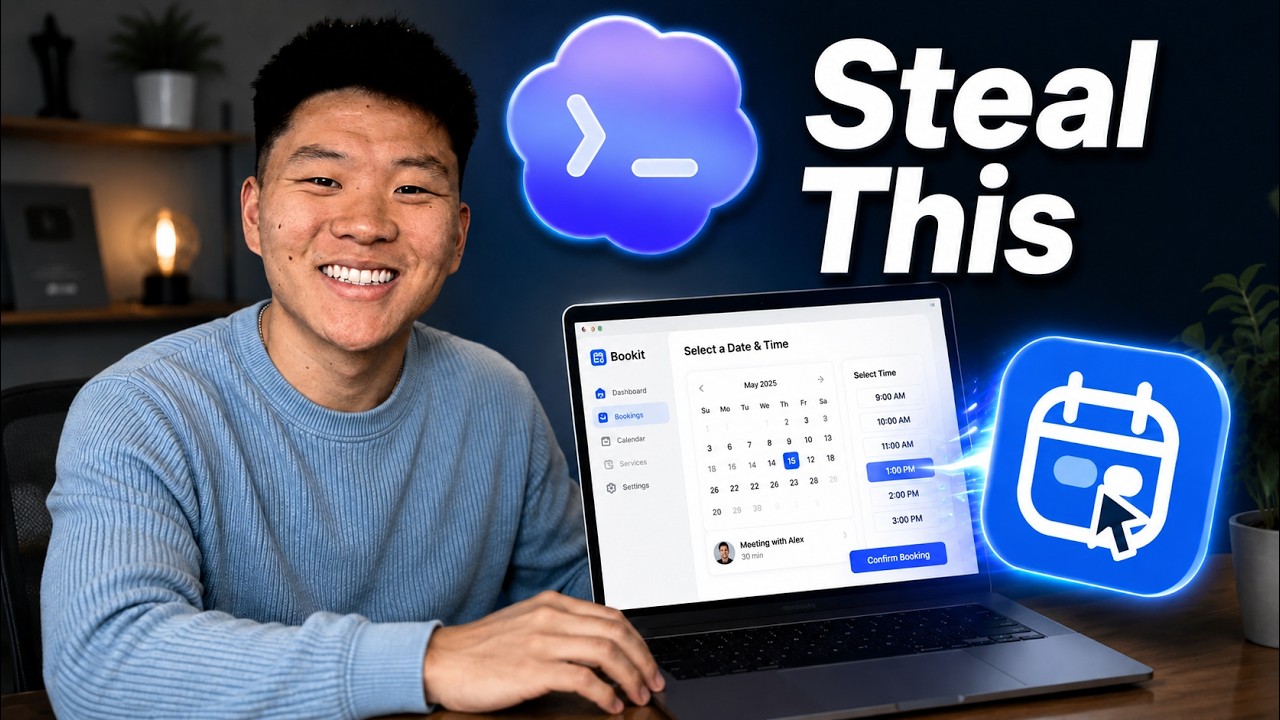
Snag Time, a free Calendly clone, was built in 5 days by AI agents using only 5 prompts and costing $15,000 in inference (paid $150 via a fixed subscription). The build consumed 334 agent-hours and 76 unique sub-agents, but lacks some automation features and requires ongoing human maintenance, illustrating the gap between rapid prototyping and production readiness.
Key points
The app was built in 5 days with about 5 goal-based prompts.
Total inference cost was $15,000 but paid only $150 on a $200/month plan.
The project used 76 unique sub-agents and over 300 delegation tasks.
The clone lacks some Calendly automation features but can be extended via prompts.
The builder manually improved UI/UX beyond what AI agents identified.
Tools mentioned
Techniques
- AI agentic development
- goal-based prompting
- multi-agent delegation
- agentic autonomous testing loop
- performance optimization through prompts
Stop scrolling. Start reading smarter.
Receive the day's most important AI & engineering updates in one concise email. No spam.
Transcript (captions)
So, I just built a clone of Kalanley and it's completely free for me to run. Kalanley has an estimated valuation of $3 billion and competitors like Cal.com have a valuation of around $150 million
and have raised tens of millions of dollars. But in one week, I was able to clone the core functionality of it with just a few prompts and now it's free for me. So, in this video, I'm going to show
you guys what I built, give it away for free, show you how you can get set up for yourself, and talk about exactly how much this cost me to actually build. So, let's not waste any time and just get
straight into today's video. All right, so just going to jump right in. This is called Snag Time. You can see that we have to sign in. I've already created an account. So, I'm just going to go ahead
and log in. And now we are at the home screen. You can see we have an overview. We have my branding. This is my workspace called Upet AI. I can see my upcoming bookings. I can see how many
I've had this month. I can see how many hours I've booked and my published links. So, how many different event types I have. I can see all of my upcoming bookings right here. And I
could go in find some more details. I could also reschedule or cancel. So, if you guys have used Calendarly or stuff like cal.com before, it's very similar. You're getting the same functionality. I
can come down here to my settings and I can change my workspace, my password, my profile photo. I can invite other members and have different like permissions whether they're a member or
an admin. And I can set up my workspace, image, colors, descriptions, stuff like that. So, what I thought I'd show you real quick is what is an event type and how does that actually work? So, if I go
to my event types, you can see that I have a revenue strategy session. I have this test and all of these were pretty much made during testing. I've made a few of these myself, like the paid
sculping session. Yes, I've connected Stripe. So you can actually book in paid calls. And then we've got this regular strategy call. So let me first just do a simple one real quick. And by the way,
all of these say local host, meaning right now I'm running all of this locally. So in order to actually get this up and running so you can send, you know, links to clients and have them
book in, you'd have to put it to some sort of public domain on let's just say Versell and then all of this is fully working. So when you get in here to set this up, you're just going to have to
connect things like your Google account, a backend database, and your Stripe account. And if you guys want to get this for free, all you have to do is go to my free school community, which looks
like this. The link is in the description. You'll go to classroom, and you'll go to all YouTube resources. You'll be able to grab the whole setup guide in there and get set up in one
day. So, anyways, let me go ahead and copy this link, open up a new tab, paste that in here, and show you guys what that actually looks like. This booking flow, you can see that I've set up for
this to be the description. I could obviously change that. This is coming through as our custom branding, and I'm going to be able to go ahead and choose a date and time. So, this is live to my
real calendar. I'll go over to the actual calendar. We're looking at Friday. You can see that I can only book in from 2 to about 3 and then from 4 to 4:30. And this is the real calendar. So,
you can see all day tomorrow is blocked off in the morning and then 3:00 to 4 is blocked off. So, this is coming through as accurate. And then if I go to like next week, there's nothing at all next
week besides these two calls. Um 9:00 a.m. to 11:00 a.m. on Monday. And if we come back into the booking link and I go to Monday, you should see that we don't have 9:00 a.m. up until 11:00 a.m. So,
this is syncing live. If I was to on Monday real quick put in some big block from like 1 till 6. We'll just call this busy. We go back over here. Oops, wrong tab. We just give this a quick refresh.
And now if I go to Monday, all those times are blocked off. So it's syncing live. Anyways, I'm going to go to Friday and I'm just going to book in for 4:15. And we're going to move on to the next
screen. This is where we can obviously put in some information. So I'm just going to put in Nate uh sample email address, which actually is real. We're just going to call this test and test.
And then we can go ahead and review the booking. This page though, I could ask more questions when I create an event type. So, I'll show you guys that in a sec. But then I'm able to just go ahead
and confirm the booking. And then this is the screen that the user who is confirming or setting up the booking sees. They get a little notification. We can reschedule or cancel it. And then if
I go back to my calendar and I go to Friday, we now see that we have the strategy call with that email address that put that in right there. And then right here, I'm in the actual email that
I just signed up for that booking call with. And you can see right here, we got the invites on our calendar, and I'm just able to go ahead and accept that. So, back in the actual app, what does it
look like to make an event type or edit one? Well, if you want to edit one, you just come in here, you click edit, and then you're able to change the color of it, you're able to change the
description, the link, the name, you can change the location, you can change how the availability works. So, you can add a buffer, you can do a date range. So, very similar to Calendarly, and then you
can also change what questions you're asking. So, you get full customization here on how many event types you need and what they need to do, all that kind of stuff. And if you're creating one,
it's basically the exact same thing. Name, description, booking link, time, all this kind of stuff. You have full customization here. And then you also get to, like I said, you can choose if
it's going to be free or paid. And if it's paid, you set the price and people have to pay it. So, let me show you real quick what that looks like to go through a paid flow. So, I'm going to do this
again on actually, let's go to Wednesday of next week. So, it's like completely open. I'm going to grab a slot at 10 a.m. We're going to move forward. This is going to be same person. So, this
person is like really anxious to book in some time and get something figured out. And um also one thing I wanted to call out. So, like I just realized this was one of the manual improvements that I
had to make. Also, this email is wrong. Um one of the manual improvements that I remember making was even though the agents clicked through all of this, they didn't find any bugs after they kept
testing. But what I noticed was you as a human, you come in here and you think, "Okay, I'm on the review stage and I want to get back to the time. I want to click up here, right?" Cuz there's this
little progress bar, but the UI originally was not designed to have these buttons be clickable. It was only designed so you would have to explicitly click on these arrows. And I don't know
about you guys, but I would always immediately click on these rather than going to click on this little arrow that doesn't really cra capture my attention. So, that's one of those things where,
you know, later I talk about some of the other things that I did in this project. Um, but I came back and I did some redesigns on the user experience because even though the agents were really good
at finding bugs, they didn't always think about the experience the same way that a human does. Even though I prompted them to, they missed something like this. And I just wanted to call
that out because that is something I explicitly remember thinking to myself like that's going to be a much better user experience. So, anyways, let's go ahead and pay for this. What happens is
it takes us to a Stripe booking link. So, it says confirming. It's going to take us over to a different link. Now, this is a sandbox environment. So, I'm putting in like this fake card, but all
you'd have to do is switch out the API keys for a real Stripe. And then boom, it works. So, let me show you how that works real quick. So, what Stripe has you do is you use this number as a
sandbox card and then you put in any combination here for these two things. And this would just simulate what it would actually look like for the user to go through this flow of putting in their
card, paying, and there you go. Now you can see that we just got that paid scoping session notification with Nate at Wednesday, September 2nd, 10:00 a.m. But yeah, that's basically it. It's a
super super simple interface. Now, I will say it's missing some of the like automation functionality that Calendarly has, but that could really easily be worked in now that you have, you know,
codeex or cloud code that is fully aware of this app existing and what you want to add to it. And you can also build those automations right in there if you please. Of course, you can come in here
and do other things like change your availability if you want to work on Saturdays and Sundays. You can change your, you know, time of operation. You can change your time zone. You can add
date override or you can add time off. And once again, now that this is yours, all you have to say is, you know, oh, can you just change how this works or can you add this functionality because
now whenever you feel a painoint due to snag time, due to the way I built it, you just ask codeex or cloud code to add more functionality into this thing because you own the software layer.
Okay, so now let's get into how I built this and what it actually looked like as far as like these stats. So before I get into these stats, let me talk about what I did because I really only shot off
like five prompts. So what I did at first was I started off with a massive goal prompt and inside of this prompt, I was basically like, "Hey, I need you to essentially we're going to clone
Calendarly here and and I want to be able to run it locally and for free." Um, what I need you to do is kind of work in four phases. The first phase was research, the second phase was planning,
the third phase was building, and then the fourth phase was actually testing. And then this kind of ran into this loop where it would test and then build and then you know test again and then keep
going. But that's kind of what I said and I wanted to research Kalanley and Cal.com and research what people say they don't like about it and what people like about it and basically take that
research into the planning phase where now we have the features and functionality that we're looking for and then planning out how are we actually feasibly going to be able to do this
with sub agents and with a back-end database and with you know integrations. What does it actually look like? And then once it was able to do all that planning, it started building and it
built and built and built. And then I had it go in this test loop where after it built, I didn't want it to give me a PC. I wanted it to put like 50 agents through it to have them go through the
admin experience, the signup experience, the, you know, creating an event type experience. They they tested the thing for me so many times before I even had to get in there. So they basically went
in this loop where they were building, finding bugs while they were testing, and then fixing the bugs and then testing again, finding more bugs, and fixing the bugs. And this alone went on
for days. And I just think that whole like agentic autonomous testing loop is just so so cool. So anyways, after that what I did was I got my hands dirty a little bit and I didn't love what came
back cuz initially what came back was an app that looked really really vibe coded. So my next thing I wanted to do was I wanted to rebrand. It came through and it was originally called Tempo Cove.
So, like locally, if I go into my project real quick, you can see right here that it's still a project called Tempo Cove inside of my Herk 2 because um that's what it wanted to name it at
first, which I didn't love. So, I did a rebrand. Now, it's called Snag Time. I think that I kind of redesigned the UI a little bit better as well. So, we did a rebrand and sort of like a redesign. And
this was just me giving some feedback. And then from there, what we did is we just did a bunch more testing. So, one thing that happened that it didn't catch was it was like really, really laggy. I
don't know why, but it was so slow. So, we were doing like performance enhancements. Um, on the actual booking link, it just like my mouse was glitching, typing was slow, it just
wasn't very responsive. So, we optimized that. I did a / goal prompt and I said, "Hey, I need you to cut down all of this like load time. I need you to make this like 10 milliseconds instead of like,
you know, 1 second or whatever it was." And it did a lot of enhancement on the actual laggginess and the responsiveness of the site itself. I came back in. The fourth thing that I did was I did more
um more designing. I mean, I I know it still doesn't look great, but like the UI oops, that's not how you spell it. Not only was the UI a little bit weird, but the experience was weird. So, I kind
of moved around some of the buttons a little bit. I'm obviously not a design expert, and like I said, this isn't like the most amazing thing ever still, but trust me, it's better than what I got.
So really the point I'm trying to make here was showing you what I had to do was that yes the initial/go goal prompt was awesome and yes I was able to get so much done with just a few prompts but I
don't want to also discredit how hard it is to build and scale a SAS product. I think there's a big difference between building a product that you can use internally for a small team and building
something that you want to truly scale like tens of thousands of dollars per month inference databasing there's going to be so many bugs there's going to be so many feature requests even if I was
to just adopt this fully internally which I want to I'm going to find so many bugs and I'm going to find so many things that I need to take ownership over or someone on my team needs to take
ownership over so it's not just as simple as a few prompts and you now have something that can you know stand the test of time So, now that that kind of, you know, I guess kind of boring stuff
is out of the way, let's talk about this. So, first of all, how long did this take me? Well, this actually took 5 days and 5 hours of actual agents running and coding, which I thought is
pretty interesting. In total, this took this was like a twoe thing because, you know, I'd shoot off prompts and then I'd work on other videos and sometimes I'd be sitting there idle for a while. But
actual working was about 5 days. So, in that 5 days though, it was an aggregate of 334 total hours of different agents running. Now they were running in parallel, doing things in parallel, but
334 hours of just straight codecs going to town on my account. And throughout this process, it only spun up 76 agents. Now, these were unique sub agents. And I think that what happened here was it
reused a lot of agents. Like agents would come, you know, they'd come, they'd grab a task, they would then do something, and then they'd report back, and then they'd sit there and wait. I
think that's what happened. What I was kind of interested in was, you know, as far as how many times it actually delegated work to sub agents. This was way more in at least 300, I'd say,
because I did so many testing loops and verification loops where I had 50 agents at least going out as a swarm to click around and try to break the app. So that was the sub agents. Let's talk about the
cost. Input tokens was 32 billion 103 million 178,736 input tokens. output tokens 47 million which I actually thought might like I I was expecting that to be more but then
when you look at the actual cost in dollars this was a $15,000 project now I was on my codeex 200 bucks a month plan so I didn't pay $14,000 $15,000 thank goodness but it's interesting because
$14,000 is roughly what you get out of maxing out a $200 per month codeex plan whereas in cloud code if you max out that 200 bucks plan it's about $8,000 in inference So you are getting about
$6,000 more inference out of codeex than cloud code if you max out the plan. And I maxed out this plan for sure when I was running this. I even dipped into the usage credit territory. So probably
150 bucks of this total cost was me actually paying out of pocket, but the rest was just my 200 bucks a month plan. So anyways, hopefully you guys find those stats interesting. But like I
said, this would not be completely free forever if I wanted to truly use this. it would be me having to probably shoot off a few prompts every month. Um, making a few enhancements every month as
new bugs pop up, but for the most part, it's probably better than paying a subscription if you're willing to dedicate some headsp space to actually maintaining this thing on the back end.
But anyways, if you guys are interested in kind of watching what this full process looks like when it comes to connecting some of the, you know, credentials and integrations and things,
then definitely check out this video right up here where I basically did like a live build all day where I just built a different SAS product. So, check it out right here. I'll see you guys over
there.