Enjoying this issue?
Get tomorrow's AI & engineering digest in your inbox — hand-picked, summarized, and always spam-free.
TLDR
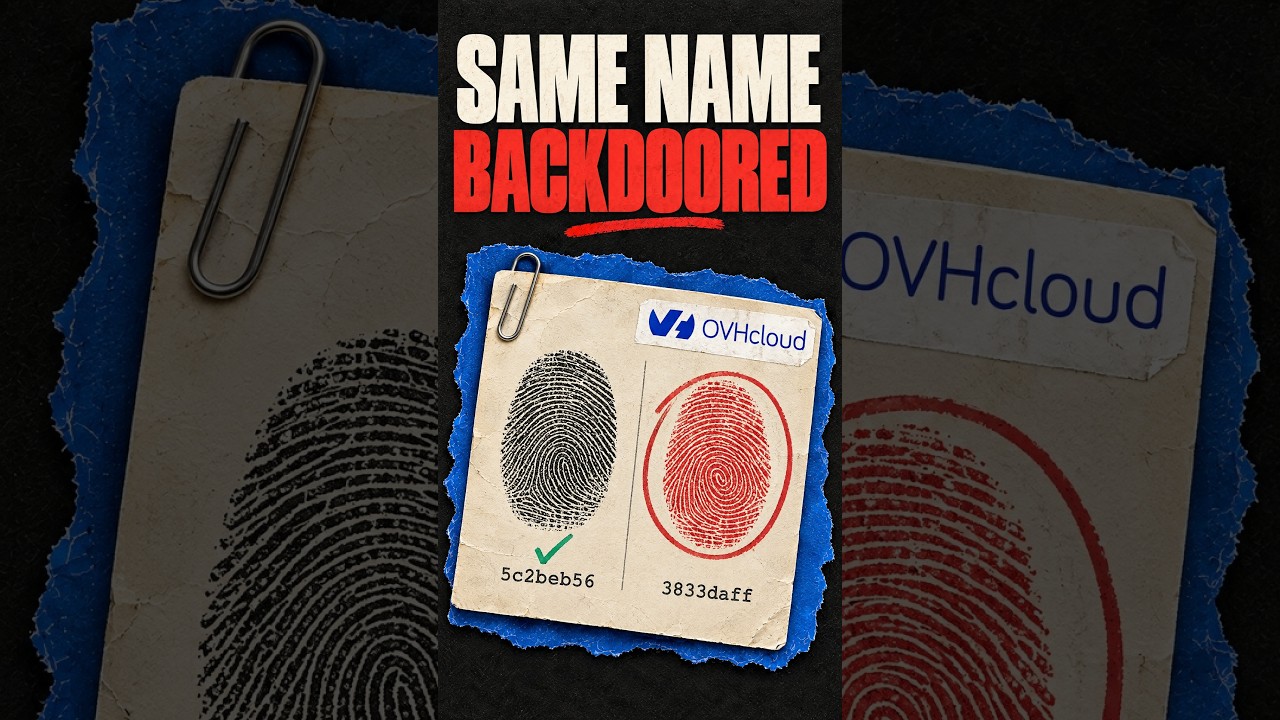
A customer CI pipeline caught OVHCloud's official CLI being silently backdoored on October 19th because it had saved the old 256-bit hash and checked every download against it. An attacker had compromised a developer's GitHub account months earlier, then replaced the release file without changing its name or version, and about 250 downloads happened in the 94-minute window. The lesson is direct: a saved fingerprint catches supply chain swaps that version numbers and filenames won't.
Key points
A customer CI pipeline caught the OVHCloud CLI backdoor by comparing a saved 256-bit hash against each new download.
OVHCloud attributes the attack to a developer's GitHub account compromised months earlier by a malicious browser extension.
The attacker replaced GitHub release files directly because releases were not locked.
About 250 downloads of the backdoored OVHCloud CLI happened in a 94-minute window.
Mozilla's bug tracker showed eight Emodra CA keys that should have been 384-bit were below 256 bits, one being the number four.
Tools mentioned
Techniques
- Pinning a hash for downloaded artifacts and verifying each new artifact against it
- Checking pinned hashes in a CI pipeline
- Enabling GitHub immutable releases to lock assets and tags
- Using signed git tags for releases
- Rotating secrets on machines that pulled a compromised artifact
Stop scrolling. Start reading smarter.
Receive the day's most important AI & engineering updates in one concise email. No spam.
Transcript (captions)
OVHCloud's official command line tool shipped a backdoor to about 250 downloads on October 19th and the file kept its name, its version, and its GitHub page. Its fingerprint is what
gave it away. That fingerprint is the files 256 hash. For the Linux ARM 64 archive of version 0.15, it flipped from 5C2B to 3833. So, what caught it? A customer CI did. It had saved the old
hash and checked each download against it. The new file didn't match. The build went red and they opened issue 300 on OVHCloud's GitHub. You'd guess bad code slipped past review. The source never
changed. OVHCloud says an attacker used a developer's GitHub account, compromised months earlier through a malicious browser extension, and replaced the release files directly
because releases weren't locked. A matching hash proves you got the same file, though, not that the file was any good. OVH Cloud's advisory puts the swap between 2:47 and 4:21 in the afternoon,
UTC plus2, and confirms those 250 downloads. That works out to 94 minutes, the same window OVH Cloud CEO gave. A maintainer deleted the binaries and shipped version 0.16 with a signed tag.
2 days later, a poison version of the Python library LLM 1.107 landed on Pi Pi with its own fresh hash. So, a PIN only helps if you check before you bump. Emodra is a certificate authority, the
kind of company whose keys vouch for websites and signed software. Eight of its keys should have been random 384-bit numbers. Mozilla's bug tracker shows all eight were below 256. So, anyone could
recover them by trying the first 256 and sign as e mudra. One per the register was the number four, which is short even by pin standards. Nothing was swapped, so no hash pin catches that. The keys
were weak from the day they were made. Mozilla, Chrome, and Apple shipped updates rejecting those eight certificates. So, pin hashes and recheck on every bump. If you publish, turn on
GitHub's immutable releases, which lock assets and tags. If you pulled OVHCloud CLI in that window, rotate the secrets on that machine. On October 19th, a saved fingerprint is what gave it away.