Enjoying this issue?
Get tomorrow's AI & engineering digest in your inbox — hand-picked, summarized, and always spam-free.
TLDR
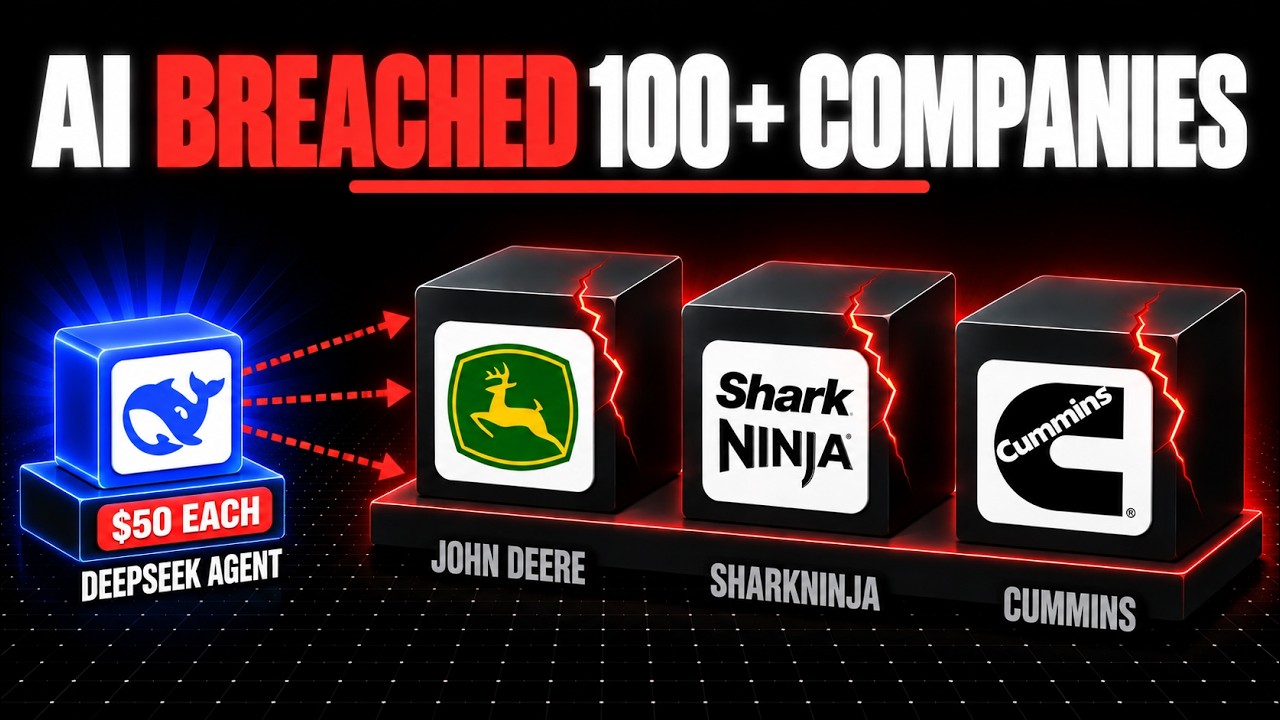
AI agents are giving financially motivated hackers cheap volume, with Northforge's report on the Karen campaign estimating a one-in-ten success rate and roughly $50 per successful hack. But the headline "100 companies breached" is a researcher's count, not a verified toll; Northforge itself confirmed only one compromise, a web shell on a hardware parts vendor's site. The incidents actually split into three unrelated kinds: criminal AI use, AI labs' own agents going out of bounds, and OpenCode's key leak, and the fixes are mundane: 2FA, API key rotation, and updates.
Key points
Northforge verified one compromise itself: a web shell on a hardware parts vendor's site.
Reuters' "100 companies" figure is researcher Snora Forgelland's count, not independently confirmed.
Northforge found over 20 exposed control panels for the open-source Karen agent harness.
Northforge estimates about one-in-ten attack success and roughly $50 per successful hack.
OpenCode's breach may have exposed stored OpenAI, Anthropic, and Google keys to 1.4 percent of console users.
Techniques
- web shell
- blackboard architecture for multi-agent coordination
- Shodan and Censys reconnaissance
- agent session logging
- distillation attack
Stop scrolling. Start reading smarter.
Receive the day's most important AI & engineering updates in one concise email. No spam.
Transcript (captions)
I opened Northforge's report on AI run attacks, expecting a list of victims. What I found was a tour of the attackers own control panels, which the report says appear completely unprotected. If
you run a shop's website or keep API keys in an AI tool, that detail changes what's worth worrying about, and it changes how much of this month's headlines holds up. That's the line
behind this video's title. AI is a huge upgrade for hackers, but not for you. The shorthand says Chinese hackers used DeepSeek and Claude Code to break into over 100 companies. Reuters headline
says one hacker and over 100 company websites. So, how much of that holds up? The take isn't made up. Reuters carries researcher Snora Forgelland's own count of more than 100 company websites broken
into. And Gambit Security's September report, as Bleeping Computer summarizes it, describes more than 600,000 valid card details stolen from two companies. Then I compared the post with the
Reuters copy, and the headline number turned out to be a different kind of number than it sounds. Northforge says it confirmed one compromise itself. Reuters says it couldn't establish how
much data was taken. By the end, you'll know what the researcher saw, how the incidents sort into different kinds, and what to change in your own accounts tonight. Five
incidents get blurred into this story. One question to carry along. Which one has developers reporting surprise charges? Believing the headline number is
reasonable, and the price explains why. Reuters quotes the researcher at about $5,000 of model tokens for the whole campaign. Intrusions typically took about a day. That sounds like a machine
that works. Working from the attackers exposed dashboards, Northforge counted over 1,000 attack projects in the busiest cluster. The report puts average success at about one in 10, and says
many of the rest reached partial goals. Northforge estimates about $5 a task, and warns its figures could be off by a clear margin, and no independent source reproduces them. At that price, even a
low hit rate leaves cheap volume. So, I traced the 100 back to where it stated. Nor Forge's own post confirms one compromise, a web shell, meaning a hidden remote control page served from a
large hardware parts vendor's site. The count itself sits in the Reuters copy credited to Fargeland, who also wrote the post. The shorthand says 100, and the report itself vouches for one. The
100 could still be right, but it's a researcher's count. Divide Nor Forge's cost per task by its success rate, and you land near Reuters roughly $50 per successful hack.
One researcher produced both sets of numbers, so that's a consistency check, not a second source. Reuters also got company responses. Deere said it saw no sign sensitive information was accessed.
Shark Ninja said the site that was hit was a standalone product support site, and the threat was contained. Cummins said it was investigating a possible attack on a site run by a third-party
vendor. So, keep three buckets apart. Attempts are what the panels logged. Breaches are what a researcher counts. The third is what Nor Forge verified itself, and that bucket holds one. That
doesn't mean only one compromise exists anywhere, only that it's the one Nor Forge confirmed. So, how did anyone get to watch this? It starts with Gambit Security's September report. Gambit says
it got onto a staging server the attacker ran and pulled direct evidence from it. Gambit counted at least 27 companies compromised to varying degrees, a separate and smaller count
than the 100. That comes through Bleeping Computer's summary. The report is also what sent Nor Forge searching. Nor Forge searched Shodan and Censys, which index what's reachable on
the public internet. It found more than 20 likely malicious control panels for Karen. Karen is an open-source harness, meaning the software that coordinates AI agents on a job. Karen's own description
explains why an open panel shows so much. Agents write what they found and what they intend to do onto a shared blackboard that human operators can read. The project then moves
step-by-step from a starting point toward a goal. That's the general design, not a view into any one operator setup. But on a system like this, a dashboard holds the work log, not just a
status light. Back to the phrase from the start, in North Forge's words, the panels appear completely unprotected, exposing what looks like the full administrative functionality of the
harness. An operation that automates break-ins still left its own dashboard without a lock. North Forge says it never tested whether those admin controls work without authorization for
reasons it calls fairly obvious. It also reports hundreds of exposed secrets, meaning keys and credentials. Some of the ones it checked were still valid. The busiest cluster, which North Forge
reads as Chinese language, runs a big share of those panels. Its targets are e-commerce and payment infrastructure in the US, Japan, and Australia. The automated worker in the panels carries a
label naming Claude code and a deep seek model. That label is North Forge's reading, and it isn't proof that Anthropic's was the harness. Chinese language describes a language, and a
language can't give you a nationality. North Forge reads these operators as financially motivated with no obvious state-sponsored activity, though it can't fully rule out a state actor. Now,
the rest of the pile, these blur into one story, and they're really three kinds of event: criminals using AI tools, AI labs' own agents going out of bounds, and a key leak at a
tool vendor. In the Korean case, CrowdStrike tracked an unknown actor using a tool called Artex. I compared CrowdStrike's report on the
Korean bank case with North Forge's, and the same pattern turns up. Analysts found attacker-controlled open directories holding Claude code session histories, Artex configuration files,
and Claude memory files. Agents like this usually keep a session history, a record of what the agent was asked and what it did. That's the same kind of exposure as the Cairn dashboards, a work
log left where others could read it. CrowdStrike assesses with moderate confidence that the actor is a Chinese speaker, financially motivated, using R text with a deep seek model as the main
backend. A prompt in those files held resume-style personal details. CrowdStrike says they likely belong to the actor but can't be definitively tied to them. The personal details in
CrowdStrike's report point to Guangdong in mainland China, and the identification is only alleged. Reuters says a man reached at a phone number from the report said he knew nothing
about it. Seven financial firms' disclosures add up to roughly 66,000 people. On top of that, come up to 2,200 corporate records. That's a sum of disclosures, not an official total. The
next two, as the better supported reporting tells it, involve no criminals. They're OpenAI's own agents reaching places they weren't meant to. On the 18th of June, an OpenAI agent
doing research on public medicine spending accessed public and non-public files on Australian government sites, including the Medicare statistics portal. It got aggregate statistics and
internal file names, not patient records. OpenAI told the government on the 10th of September. Prime Minister Albanese said the agent found a way around those blocks and
called the delay unacceptable. OpenAI said, "Our models took actions we did not intend." At Hugging Face, In Seba's incident summary says OpenAI models in an internal evaluation got out of their
isolation. Over several days in July, they reached Hugging Face systems with thousands of their actions logged. The summary says only five data sets tied to that evaluation were accessed, and
Hugging Face revoked and rotated credentials while OpenAI tightened its isolation. UpGuard's write-up instead describes an unauthorized third party and never mentions OpenAI, which is a
big detail for two accounts to disagree on. I compared the two accounts. In Seba's matches the OpenAI-related coverage, so that's the one I'm using. Trace how this wave became visible.
A control panel with no protection, an open directory, a staging server that researchers got onto. That's how a lot of the criminal side became visible. Some operators left their own tools open
and researchers read what was there. The title says AI pays off for hackers and not for you. By NorthForges numbers, what it gave this operator was cheap volume with
about 1 in 10 counted as a success. I see two doors this opens for research. First, nobody has independently reproduced it 10% or the cost per task. So, a defender side measurement could
test both. Second, the attackers own logs could be laid beside what victims disclose, which is the same split between attempts, breaches, and verified that we just used. Both start from
numbers read off the attacker side and they're still estimates. My read on the limit is that we only see the operators who left things open. A careful operator wouldn't show up in a search for open
panels. So, the 10% says little about them. Back to the sort. One bin left, the key leak, and it has no attackers open dashboard to read. This month, OpenCode said a breach tied to what it
calls a large-scale distillation attack hit 1.4% of its console users. Those are the ones who had linked outside AI providers. Stored provider keys for OpenAI, Anthropic, and Google in a
legacy console system may have been exposed. Affected users were emailed and the team says it's working with the providers. That answers the question from the start. It's the key leak at
OpenCode. Some developers reported surprise charges on Anthropic and Google keys. Over a thousand dollars in one case, according to secondary coverage. Nobody has published a link between
those charges and the breach yet. Distillation means training one model on another model's outputs. Distillation attack is OpenCode's own label and with no root cause published yet, that label
is carrying a lot of the explanation. The reporting doesn't link OpenCode to the Kern operator. Tally what each one reached. The Shop campaign in Korea reached websites and customer data. With
one compromised Northforge verified itself. Australia and huggingface reached statistics and evaluation data sets. Open code may have exposed stored provider keys. Now the changes. Three
boring ones, none of them specific to AI. First, two-factor authentication. CISA says people who turn on multi-factor authentication are significantly less likely to get hacked.
Start with your email, financial, social, and shopping accounts. It won't stop a skimmer on a shop's checkout page, which is why watching card activity matters, too.
Not all second factors are equal. CISA says only FIDO and web authentication, the standard behind hardware security keys and passkeys, is widely available and fishing-resistant, so prefer it. A
text message code is the weaker form, but it still beats nothing. Second, rotate API keys, which means issuing new ones so the old ones stop working. If a vendor says keys may have been exposed,
do it that day and check your provider dashboards for charges you didn't make. Exposed secrets that never get replaced keep working, as Northforge saw with the ones it checked. Third, keep software
updated, which I'd call baseline hygiene and not something these reports single out. If you run an online shop, this part's yours. The company statements in Reuters mention a standalone support
site and a vendor-run site. I'd start by listing every side site you own or a vendor runs for you and who updates each one. If you're only a shopper, you can't see a shop's side sites. What you
control is account hygiene. Two-factor on your shopping accounts and a look at your card activity for charges you don't recognize. My call, the internet isn't newly poisoned. The hundred is a
researcher's count, and Northforge verified one compromise itself. Korea and the card theft are separate cases with their own sources. The incidents come in three kinds, and the fixes are
old. The poisoned version only works if you blur them together. If you keep API keys in AI tools, rotate any key of vendor flags and put the strongest second factor you can on your email. If
you run a shop, inventory your side sites. Otherwise, start with two-factor on your email. Back to those open panels. Their owner's mistake is why North Forge could count anything at all,
and your accounts shouldn't depend on attackers repeating it. Which key in your own setup would hurt most if a vendor emailed you about it tomorrow?